
GPS 123 — Datums and Datum Systems
Available at iso-gps.com ↗. List price US$ 99.
Prerequisites: GPS 120, GPS 121, and GPS 122.
Course Topics
- Introduction — how datums constrain tolerance zones
- Indication of datums on drawings:
- Simple datums
- Partial-feature datums
- Datum targets
- Common datums
- Datum association — the relationship between datum features and geometrically perfect datums
- Datums and datum features
- Datum systems and constraining degrees of freedom
- Theoretically Exact Dimensions (TEDs)
Course Description
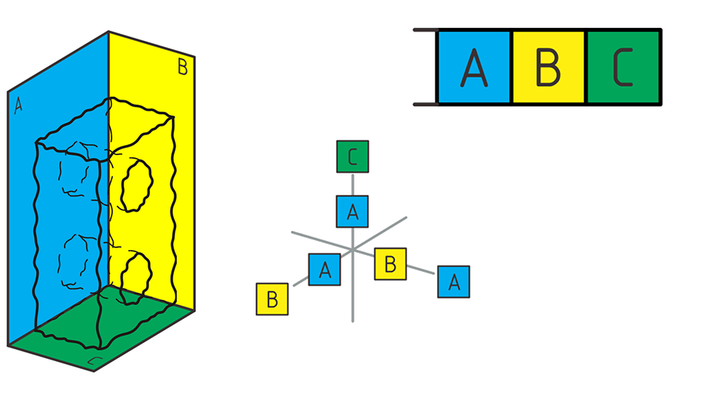
Datums and datum systems are used within GPS to constrain tolerance zones. By referencing datums in a geometrical specification, you can lock one or more degrees of freedom for the tolerance zone, placing it in a defined position and orientation relative to the component. Designing datum systems that mirror how components assemble into products is what enables larger tolerances while still ensuring function.
The course begins with how datums are indicated on engineering drawings — covering the full range from simple datum indicators to partial-feature datums, datum targets, and common datums. It then explains datum association: the process by which a geometrically perfect datum is derived from the real, imperfect datum feature on the component.
The second half of the course covers datum systems — how a sequence of datums progressively constrains the degrees of freedom of a tolerance zone — and the use of Theoretically Exact Dimensions (TEDs) to define the exact position and orientation of tolerance zones relative to the datum system.
Learning Goals
Upon completing this course you will be able to:
- Understand how datums constrain tolerance zones by locking degrees of freedom.
- Read and write datum indications on engineering drawings, including datum targets and common datums.
- Understand datum association and the distinction between a datum feature and the geometrically perfect datum derived from it.
- Build datum systems that constrain the required degrees of freedom in the correct sequence.
- Use Theoretically Exact Dimensions (TEDs) to position and orient tolerance zones.
This course is intended for engineers, metrologists, and quality professionals who need a thorough understanding of datums and datum systems in order to specify and verify geometrical tolerances correctly.